Showing posts with label Sea. Show all posts

Tuesday, December 27, 2011

Monday, July 18, 2011

Ridges, Seals, Kangaroos, Sandstone, Surf, Wine - South Australia

Kangaroo Island, accessible by ferry or plane, from Adelaide

"Sahara" - orange sandstones rich in iron ore

Fur Seals

(Note : recently this blog is not functioning properly, making certain photos rotate anything but right side up).


New Zealand Penguins


Flinders Range, undulating valleys and grassland


Barossa Valley vineyards

Great Ocean Road, Apostles, Arch, London Bridge - in the state of Victoria

Some old photos taken 10 years ago dished out to relive sweet memories.


Due to wind and sea erosion, most of the features have either diminished in size or vanished.


The 12 great apostles were left with 11 when we last saw them.

Someone counted nine when they visited two years after.

Arches and blowholes formations from ravages of nature


These photos were taken with a semi auto / manual SLR. These copied versions using portrait autofocus doesn't do justice to the original prints.

But it's still something.


Recently, I was told there are no longer thousands of penguins rushing from the shore. Nowadays, visitors have to wait till later into the night to see scant parade of these wonderful creatures. Another consequence of pollution, global warming and man's intrusion into their natural habitat?!

Tuesday, December 28, 2010

Drummoyne - Rodd Park and Canada Bay Park

Canada Bay is not as accessible and family friendly compared to Rodd Park at Henley Marine Drive which has a magnetic force that draws many families to gather during weekends and public holidays.


Enjoy the simple pleasures of immersing in the beautiful perspective from all sides of the park shaped like a peninsula. It was Christmas Day. Voices of young carol singers at one shady end drifted through the warm sunny atmosphere. Extended families and friends leisurely catching up with lost time during the year. The energetic ones busy at the BBQ and playing games while the seniors ran after small children capitalising on their freedom in the wide open space.


One could get so close to the water. The rocks which have been seasoned and smoothened by the gentle ripples in the bay are alluring. But beware as they are very slippery. Some picnickers have brought rafts and boats but there were no swimmers in sight.

Fishing, anyone? Hope the water is clean and safe for fishes and consumers.


Fortunate are those who have acquired waterfront homes which are worth fortunes today. But rising tide waters due to global warming within a generation will always be at the back of our minds.

Friday, March 5, 2010

Avalon - Northern Beaches, NSW


Sea water swimming pool


- Copyright Reserved

Tuesday, January 12, 2010

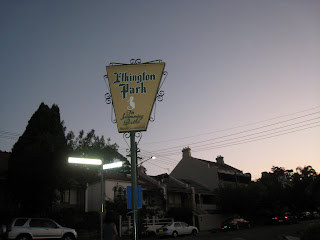
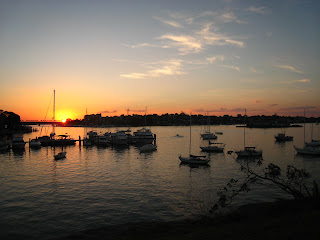
Sunset at Elkington Park, Balmain waterfront


Soothing ripple
Enjoy the video


- Copyright Reserved
Permission required

Friday, January 1, 2010

Sea Cliff at Clifton, Lawrence Hargrave Drive, Wollongong

The sea cliff bridge is a man-made feature on a natural setting of steep cliff and open sea. Lawrence Hargraves Drive is 60 km from Central Sydney and 23 km north of Wollongong.

Every time we pass by here, the skies are grey. In our latest visit, the clouds are holding up and the showers are isolated and short spelled. 


Heading south and down slope after passing the Royal National Park.


Vehicles slowing down to have a glimpse of the breathtaking view. But the skies are not cooperative as dark clouds gather and spread from the horizon to overcast.


Returning from Wollongong northwards, the view of the cliff becomes clearer from the passenger seat. So far, the views have not proven to be as spectacular as described by previous visitors and travel guide.


That is not all this area has to offer the keen photographer and excited interstate tourist.

Hidden in the tracks under the bridge is a natural world of charming vegetation, beaches, surfs and wildlife.


- Copyright Reserved


Saturday, October 17, 2009

Manly Spit Bush Walk

The 9 km walk from Manly wharf to the spit bridge link to Mosman is scenic but strenuous. Starting leisurely from the wide walkways and gentle slopes of Fairlight, we have no inkling of the rugged terrain that lie ahead.


Tough ascend from Forty Baskets and Reef beach onwards.


Spectacular views of the bays and inlets


Rocky shores are ideal for fishing and picnic but not for swimming.

Castle Rock close to Clontarf


The final destination : Spit Bridge
A jet stream vapour trail promoting a religious message.


- All photos and content are copyright reserved.

Permission required to publish.

Sunday, April 26, 2009

Wonders of Nature - from all over the world

Just a slight digression from Australian nature; my old friend sent me some pictures of natural wonders and phenomena and I would like to share these spectacular scenes with fellow nature lovers.

Moving Stones

The mysterious moving stones of the packed-mud desert of Death Valley have been a center of scientific controversy for decades. Rocks weighing up to hundreds of pounds have been known to move up to hundreds of yards at a time. Some scientists have proposed that a combination of strong winds and surface ice account for these movements. However, this theory does not explain evidence of different rocks starting side by side and moving at different rates and in disparate directions. Moreover, the physics calculations do not fully support this theory as wind speeds of hundreds of miles per hour would be needed to move some of the stones.

Red Tides

Red tides are also known as algal blooms - sudden influxes of massive amounts of colored single-cell algae that can convert entire areas of an ocean or beach into a blood red color. While some of these can be relatively harmless, others can be harbingers of deadly toxins that cause the deaths of fish, birds and marine mammals. In some cases, even humans have been harmed by red tides though no human exposure are known to have been fatal. While they can be fatal, the constituent phytoplankton in ride tides are not harmful in small numbers.

Mamatus Clouds

True to their ominous appearance, mammatus clouds are often harbingers of a coming storm or other extreme weather system. Typically composed primarily of ice, they can extend for hundreds of miles in each direction and individual formations can remain visibly static for ten to fifteen minutes at a time. While they may appear foreboding they are merely the messengers - appearing around, before or even after severe weather.

Ice Circles


While many see these apparently perfect ice circles as worthy of conspiracy theorizing, scientists generally accept that they are formed by eddies in the water that spin a sizable piece of ice in a circular motion. As a result of this rotation, other pieces of ice and flotsam wear relatively evenly at the edges of the ice until it slowly forms into an essentially ideal circle. Ice circles have been seen with diameters of over 500 feet and can also at times be found in clusters and groups at different sizes as shown above.

Fire Rainbow

A circumhorizontal fire rainbow arc occurs at a rare confluence of right time and right place for the sun and certain clouds. Crystals within the clouds refract light into the various visible waves of the spectrum but only if they are arrayed correctly relative to the ground below. Due to the rarity with which all of these events happen in conjunction with one another, there are relatively few remarkable photos of this phenomena.

Blue Holes


Blue holes are giant and sudden drops in underwater elevation that get their name from the dark and foreboding blue tone they exhibit when viewed from above in relationship to surrounding waters. They can be hundreds of feet deep and while divers are able to explore some of them they are largely devoid of oxygen that would support sea life due to poor water circulation - leaving them eerily empty. Some blue holes, however, contain ancient fossil remains that have been discovered, preserved in their depths.

Columnar Basalt


When a thick lava flow cools it contracts vertically but cracks perpendicular to its directional flow with remarkable geometric regularity - in most cases forming a regular grid of remarkable hexagonal extrusions that almost appear to be made by man. One of the most famous such examples is the Giant's Causeway on the coast of Ireland (shown above) though the largest and most widely recognized would be Devil's Tower in Wyoming. Basalt also forms different but equally fascinating ways when eruptions are exposed to air or water.